
Taiwan's high mountain oolongs are among the most quietly expressive teas in the world, and the three names most drinkers meet first — Alishan, Lishan, and Shanlinxi — taste like the ground they grew on. Learning a little geography turns a pleasant cup into something you can actually read.
What "High Mountain" Really Means
Taiwanese growers call this category gaoshan cha. Most definitions point to gardens above 1,000 meters, but the line that matters sits closer to 1,200. Above that, the weather does something to the leaf you can taste.
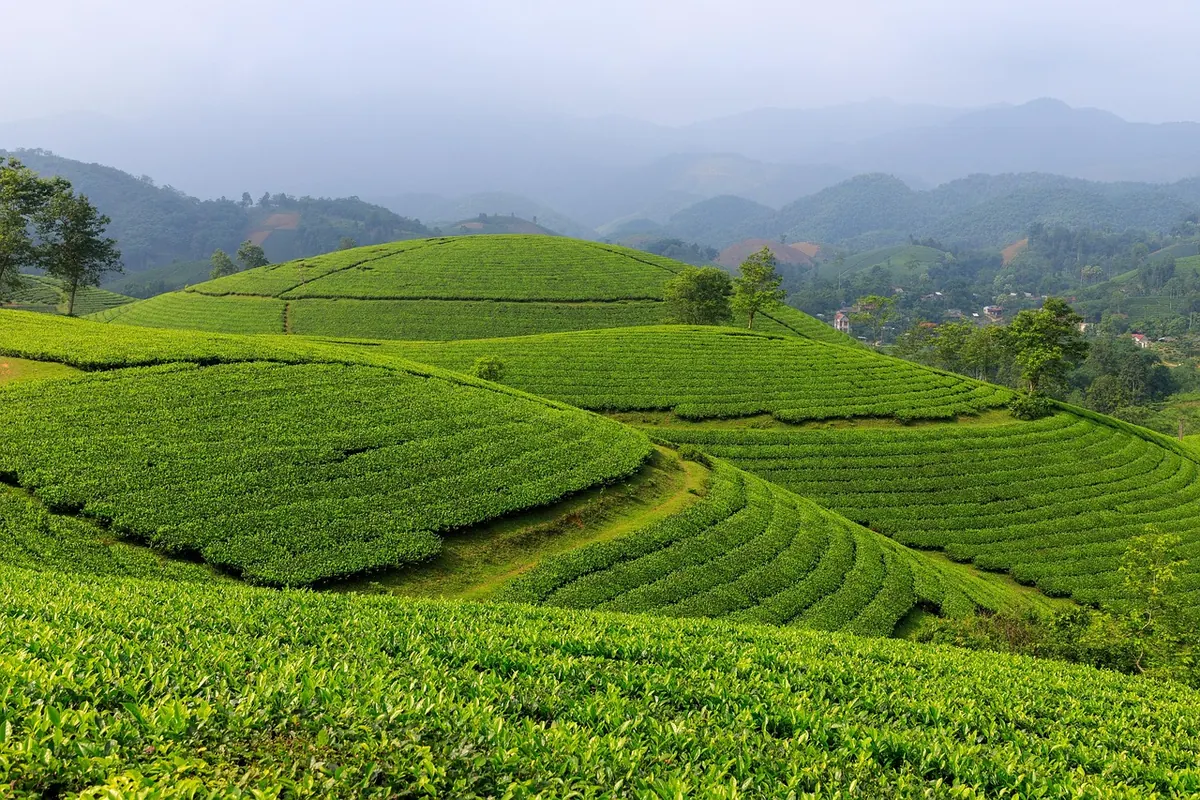
Clouds and fog hang over these slopes for much of the day, cutting direct sunlight. Temperatures drop sharply at night, which slows the plant down. Slow growth concentrates the compounds that read as sweetness and body while keeping bitterness in check. The result is a thicker, more elastic leaf with a heavier build in the mouth after processing.
Soil and slope matter too. High mountain gardens sit on steep, thin soils — slate, shale, forest humus — where drainage is fast and roots work harder. Most of these teas are made from the Qing Xin cultivar, known for its clean floral aroma, though Jin Xuan shows up with a softer, creamier character. High mountain oolongs are typically lightly oxidized and ball-rolled, with little or no roasting, so the mountain shows through.
Elevation alone doesn't guarantee quality. A well-managed garden at 1,300 meters can beat a neglected one at 2,000. Picking standard — one bud with two or three leaves — and the care taken during withering and rolling do as much as altitude.
Alishan: The Gateway
Alishan is the name most people encounter first, and for good reason. The tea area spreads across Chiayi County, roughly from 1,000 to 1,700 meters, with well-known pockets such as Shizhuo and Zhangshu Lake. Roads are good, harvests are relatively large, and the style is friendly to newcomers.
Expect orchid and gardenia on the nose, a soft creaminess, and a light-to-medium body. The finish is gentle and forgiving of a slightly clumsy brew. If you are coming from lighter green oolongs, this is the natural first step.
One caution: "Alishan" on a label is as much a brand as a place. Blends and tea from lower elevations are often sold under the name, so buy from a vendor who can tell you the village and the harvest date.
Lishan: Cold Air, Firm Structure
Lishan sits higher — roughly 1,600 to 2,600 meters in Taichung's Heping District, including the celebrated Fushoushan and Dayuling gardens. The growing season here is short and cold, and some gardens manage only two harvests a year.
That stress shows in the cup. Lishan teas tend to be crisp and alpine, with notes of pear, sugarcane, and mountain herbs. The aroma is high and piercing, the body is firm, and the finish lingers with a faint mineral coolness that drinkers often describe as "high mountain air."
Because yields are small and demand is constant, Lishan is the most expensive and most counterfeited of the three. Real examples are worth tasting at least once, if only to calibrate your palate for everything else.
Shanlinxi: Woodland Sweetness
Shanlinxi lies in Nantou County above Zhushan, between roughly 1,200 and 1,800 meters, ringed by bamboo groves and cedar forest near Xitou. That environment gives the tea its signature: sweet, woodsy, and composed rather than showy.
Where Alishan leans floral and Lishan leans alpine and brisk, Shanlinxi often tastes of sugarcane, light pine, and roasted chestnut, with medium body and a steady, honeyed finish. It handles slightly hotter water than its neighbors without turning bitter, which makes it a practical daily tea.
Shanlinxi is also where many drinkers find the best balance of price and quality among the three regions.
Reading a Label Without Getting Fooled
The label carries more information than most buyers use. Check these points before you commit:
- Elevation. A number in meters, not just "high mountain." Vague labels usually hide something.
- Harvest date and season. Spring (roughly April–May) and winter (late October–November) are the prized pickings. Spring tends to give body; winter gives aroma.
- Village or farm name. Shizhuo, Zhangshu Lake, Fushoushan, and Dayuling mean something specific. A named source is a good sign.
- Cultivar. Qing Xin is the classic; Jin Xuan is softer and creamier.
- Processing style. Lightly oxidized and unroasted is the high mountain norm. Heavy roast may be hiding tired leaf.
- Who sourced it. A vendor who visits the farms can answer questions about the garden, not just the region.
None of these alone proves quality, but together they tell you whether the seller knows the tea or is just repeating a name.
Brewing So the Mountain Shows
These teas are delicate but not fragile. Give them room and they will show their structure.
- Use soft water. Heavy mineral content flattens aroma more than any other variable.
- Start with 5–6 grams of leaf per 150 ml of water, in a gaiwan or small pot.
- Heat water to about 90–95°C. Boiling water works for Shanlinxi and older leaf; drop the temperature for a delicate spring Alishan.
- Rinse the leaf briefly with hot water and discard that first pour.
- Steep 45–60 seconds for the first cup, then shorten to 30–40 seconds for the next few, lengthening again as the leaf fades.
- Smell the empty cup after you pour. High mountain oolongs leave their best aroma there.
Adjust freely. If a cup tastes thin, use more leaf rather than more time. If it turns bitter, shorten the steep or cool the water.
A Practical Way to Start
Buy a small amount of each region from the same vendor, ideally from the same season. Brew all three side by side with identical water and leaf ratios, and taste them warm and cooled. Alishan will read floral and soft, Lishan alpine and firm, Shanlinxi sweet and woodsy. Once you can name those differences without looking at the labels, you have a reference point that makes every future purchase easier.
Store what you don't drink soon in an airtight container away from light and strong smells, and finish lightly oxidized high mountain oolong within a year or so for the best aroma.
Photo: Oliver_Nguyen / Pixabay